The Bell Tolls

Good morning Tash Appreciators,

I woke up on Wednesday to the joyous news that First Scotrail has been unsuccessful in retaining its franchise to run most of Scotland’s train services for the next ten years. TF’s dissatisfaction with Scotrail has been well documented and I won’t repeat the standard complaints that most – if not all – Scotrail customers make against their local train service.
Tash Friday 10:10:14 4

For some very strange reason, when I heard the news I immediately thought: “the bell tolls”. I thought about tweeting @scotrail “the bell finally tolls for thee.” I didn’t, that would not have been good for my Twitter-cred.

What I did do was wonder where that phrase about bells tolling came from.

It turns out the phrase comes from a passage in John Donne’s, Devotions Upon Emergent Occasions, Meditation XVII: Nunc Lento Sonitu Dicunt, Morieris. I’m sure you’re all familiar with Mr Donne’s seventeenth century work (and his very pointy beard) but here’s the relevant part (and a painting of his beard!):

“No man is an island, entire of itself; every man is a piece of the continent, a part of the main. If a clod be washed away by the sea, Europe is the less, as well as if a promontory were, as well as if a manor of thy friend’s or of thine own were: any man’s death diminishes me, because I am involved in mankind, and therefore never send to know for whom the bells toll; it tolls for thee.”

Tash Friday 10:10:14

There are apparently a few interpretations of that passage but I think he’s saying we’re all connected and that if the bell tolls for one of us, or if one us suffers loss, we are all diminished.

Let’s test out our old chum John Donne’s theory in relation to the loss of First Scotrail:

  1. First Scotrail’s franchise is being taken over by a Dutch company. First is run from aberdeen and so, perhaps, this means that more of the profits of the business will flow out of Scotland than before.
  2. Scotrail will have presumably done their best over the last couple of years to pull out all of the stops to ensure that their service was as good as it could have been in an attempt to keep the franchise. Will the new franchisee have the same incentive given that they’re here for at least five years and probably ten?
  3. Some of what is wrong with Scotrail’s current service stems from the network itself; which they annoyingly remind us is nothing to do with them.
  4. Does changing the franchisee every ten years discourage real investment in improvements?
  5. Perhaps most importantly, Scotrail employs almost 5,000 people. As we know, in most cases where ownership of a business is transferred or there is any kind of major reorganisation, “rationalisation” – which always seems a gruesome euphemism for sacking people – occurs. We don’t really believe that we’ll soon be travelling between any Scottish city for a fiver – as has apparently been promised – so why would we believe that there won’t be any compulsory redundancies?

Having thought about it, I think big John Donne pretty much nailed the economic realities of a 21st century liberal society. That’s pretty solid work for a guy from the 1600s.

Anyway, having bored you all rigid with that, it’s time for the Tash. Ernest Hemingway saw the truth in what John Donne said and gave one of his books the title: “For Whom The Bell Tolls”. Apart from trying to work out how Hemingway came across Donne’s work without the assistance of Google, I realised that this was as good an opportunity as I’m going to get to use a quote of Hemingway’s which I particularly like:

“Never mistake motion for action.”

I almost made that mistake this week when I heard that Scotrail was being sacked. I’ll wait to see if the change is motion or action.

As you’d expect from one of the 20th centuries great wordsmiths, Hemingway wore an excellent Tash.

Tash Friday 10:10:14

Have a great weekend folks!

What’s next?

Buenos Dias Tash Appreciators,

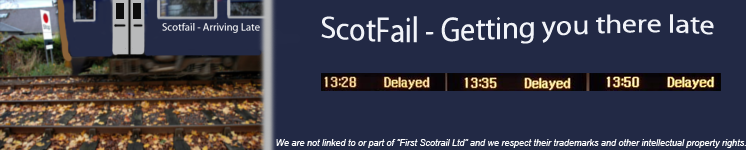
For one reason or another, targets have been on my mind this week.  For example, scenes like this got me thinking:

I use a train service which runs every 15 minutes. However, a couple of times this week (this very moment being one of them) the train I have been waiting for has been 20 minutes late. 

Thankfully, the train company has a helpful app to keep me up-to-date with developments. Strangely, the app says the train has been cancelled but the board on the platform says it’s just delayed and the announcer says the train “is approaching the platform”. The station announcer is clearly lying. The train I was initially waiting for isn’t approaching the platform and it’s not delayed. What’s really happening is that my train has been cancelled and the train which was due after it is 5 minutes late. 

The reason for this lie is that the rail company has targets to meet and if it fails to meet those targets the company will be fined. The reason there are targets is that when the rail system was privatised, consumers were told that strict standards would be imposed upon the companies who won the rights to operate the routes. It’s therefore in the operator’s interest to claim that the train is late rather than admit what’s really going on. 

Last year, this particular operator was fined £374,000 for failing to meet the required standards of service. When this was announced, both the operator and the Government hailed it as a triumph: this was the third drop in fines in a row and standards must therefore be getting higher. 

The problem is that there’s a disconnect between the result of the target being hit and what the customer actually wants: a service that runs on time, has plenty of seats and doesn’t cost the earth.  I don’t blame the operator; they’re hitting their targets. The blame, in my opinion, rests with the Government in setting targets that can be so easily manipulated.  

If you want a target which has some meaning, you have to set parameters which are appropriate for what you’re measuring. For example, spring will see many of you working out your annual targets for the coming year. If you’re in sales, your target will be to sell X number of products; if you’re in manufacturing, your target will be to make Y number of products; and if you’re in the service industry, your target will be to deliver Z services. 

But that’s too simplistic. The target also has to be realistic and balanced. To continue with trains, I don’t expect every train to be on time. The weather is poor today so I understand that the train might be late. The target therefore can’t just be about delivering the service. Other factors have to be considered too, such as whether the customer is happy and whether the service is of a decent quality. Targets shouldn’t be just figures.

Even though I use this train service five days a week for about 46 weeks of the year, I’ve never been asked what I think about it . Surely, it’s the customers’ views that should be the ultimate barometer of whether it’s a good service or not.  I think that’s something that gets lost these days; particularly when companies and the public sector are struggling for cash. After all, if the customer isn’t happy, what are we all doing?

To the Tash! A man who always hit his target and who always keeps his customers (“the poor”) happy: it’s Robin Hood:

Until next week…

Keep going!

Commuter Code of Conduct (Train Ed, 2013)

Morning Tash Appreciators,

I’ve noticed in the last week or so that it has been much lighter in the mornings. This is good in the sense that its nice to not feel nocturnal but it has a downside. I like to call this downside the amateur commuter. At some points in the summer, amateur commuters make the 7.30 to Waverley look like this:


Amateur commuters are those who only take the train every now and again. If they have to take the train, they’ll only do so when the weather is good. The day before, they’ll have described their trip to their colleagues as either being “a nice change” or “a pain in the neck”. I much prefer the latter category. I suppose, therefore, that my wrath is restricted only to those amateurs who look forward to the experience. 

They can be identified by any/all of the following signs:

  1. They’ll be standing looking at the departures board in the station (if you get the train every day you know exactly where you’re going);
  2. They’ll be holding a ticket for which they will be reimbursed; 
  3. They will have a bucket of Starbucks and a muffin/some other sweet confection (if you do it every day you can’t afford those luxuries);
  4. They will have a pal with them (the worst kind of amateur commuter);
  5. They’ll spend ages working out where they want to sit;
  6. They will put their gear (of which there will be a tonne) on the seat next to them;
  7. They’ll phone someone to confirm that they have “finally made it on the train and have found a seat” (the third worst kind of amateur commuter); 
  8. They’ll be awake during the journey;
  9. They’ll have terrible, leaky, earphones (the second worst kind of amateur commuter); and
  10. They’ll be on their feet and heading for the doors 5 minutes before anyone else. 

These folk stand out a mile and this is because, in any particular carriage, there are maybe twenty people who sit in the same place every day. You’ll know who the regular commuters are by looking around the carriage and, if you’re on the phone, talking loudly to a pal or using leaky earphones, all the people who are looking at you do the journey every day. 

If you only get the train every now and again please follow this simple code of conduct:

  1. Do not under any circumstances speak to a distant acquaintance with whom you have not spoken in the last 6 months or more. They do not want to speak to you. A wave is more than sufficient and don’t be offended if you are ignored. Personally, I’d ignore you. 
  2. Do not bring a pal along for the ride. If you do, keep any discussion at a minimum and at a low level. No laughing.
  3. Wait until the last minute to board the train. You’re an amateur, you have no right to a good seat.  
  4. Under no circumstances speak to someone on the phone. No-one wants to hear what “mega deal” you’re closing that day. It’ll wait till 9, idiot. 
  5. Take the window seat if it’s available and keep your gear off the seats. You’re not getting two seats to yourself; accept it. If I see you sitting in the aisle seat with a window seat next to you, I’ll take great pleasure in making you get up to let me in.

The above will sound intolerant and rude. Please don’t take it that way. Commuting is a necessary evil which people adapt to in their own way. For me, I sleep in the morning then either read or watch something on my generic tablet device on the way home. Most other regular commuters find a similar way of chilling out. Therefore, if you don’t do it all the time, have a thought to those who do and leave them in peace. 

If you don’t keep the noise down, you will appear to others like the most annoying man on telly: this week’s Tash, the guy from the Go Compare advert. If he was on my train, he would find himself being compared to a findus lasagne: definitely something which was formerly an mammal but you’ll need to test it at a molecular level before you can tell what it was previously.


Have a great weekend folks. 

Keep going!