Oppan Gangnam Style

안녕 Tash Appreciators,

It’s Friday again!

Here at TF, we like to cover current affairs. Sometimes this can lead to fairly heavy content,so we also like to mix it up a bit. This week, we’re starting with this chap:


No, not the guy on the left, that’s only the Secretary-General of the UN, Ban Ki Moon!  It’s the man on the right we’re interested in. His name is Psy, a Korean popstar, and he’s teaching his dance to one of the most important men in the world.
The dance is taking the world by storm. The video for Psy’s song, “Gangnam Style”, has over 530 million views on youtube (https://www.youtube.com/watch?v=9bZkp7q19f0) and you’ll see people cutting that particular shape in discotheques everywhere from Paisley to Psy’s home-town, Seoul. You’ll even see some people doing it down the aisles of their local supermarket, but that’s another story. 
The point is that you will all need to know how to do the dance as it is/is going to be the next Macarena. TF always tries to be informative and so below is a handy guide to the dance. If you follow these simple steps, you’ll be able to tear the dance floor up with the best of ‘em:
If you have any problems, ask the nearest hipster/person under 25. They’ll be able to help you out. 
Psy is the latest in a long line of cracking Korean exports but he’s the first to really hit the jackpot. You’ll hear more about Korean exports in the years to come, particularly if you go to the cinema a lot. In 2003 for example, a Korean film by the name of “Oldboy” was released and the plot was…unusual. That’s all we’ll say about it as it’s now being re-made for a Western audience (i.e. without subtitles) and the remake’s star is this week’s Tash:
That’s Josh Brolin in No Country For Old Men (another belter of a film). We can only hope he rocks a similarly superlative Tash in Oldboy.
Have a fantastic weekend folks, try to do it Gangnam Style.

Pay no attention to the man behind the curtain

Salut Tash Appreciators,

There have been a couple of requests for TF’s views on Lance Armstrong and his fall from grace. In short, it’s been as if the curtain has fallen and he has been exposed as being what he really is – ordinary. It’s a bit like the Wizard of Oz:

There are some similarities between the impact that Armstrong’s story has had on cycling fans (and maybe everyone else, too) and the stages of grief. Even those involved in the sport were in denial about what was going on.  They deluded themselves into believing that he was superhuman. Then came anger at the realisation of what he had done; bargaining (“they were all at it!”); depression (“the sport will never recover”); and finally, acceptance. 

For those who follow cycling, the evidence against Armstrong has been known for a while. We are therefore mostly well on the way to acceptance (although we won’t wear our Livestrong T-shirts or jerseys ever again). The sport itself is dealing with doping and we’ll need to wait and see if the new clean policies of team directors have a positive impact. Like in all walks of life, there will always be those who seek to gain an unfair advantage, but the important thing is that the people at the top are doing the right thing.

Armstrong’s story is also a good metaphor for the last decade or so. He won an unprecedented 7 Tours between 1999 and 2005, just a year or two after he defeated cancer. His story, and the incredible things he did every July for seven years, caused most of us to believe he was special and that the conventional rules of physiology didn’t apply to him. 

That matched our attitude to most things at the time. We were at the peak of our powers: house prices were seemingly on a never-ending rise; wages were increasing; there was no end to economic prosperity in sight. 

Both in sport and economics, we were obviously wrong. However, on the upside, the recession, and now the Armstrong scandal, has left us with a healthy cynicism. 
There was a fantastic article in a cycling magazine during the summer which questioned why everything about Armstrong was coming out now. It’s explanation was that we used to believe in fairy stories and drink in the impossible. To use a Scottish analogy, it was like we were bevvying hard on a Saturday night, having the time of our lives but thinking that by some miracle a couple of pints of water before going to mitigate would mitigate the hangover the next day… Or that  all the partying wasn’t having an impact on our bank balances. But now we ask more questions.
There’s been a realisation that if something is too good to be true, then it probably is. That can only be a good thing. The more we question and evaluate what’s going on, the more we can influence things. This started with billion dollar enterprises being exposed as nothing more than fancy algorithms/classic frauds disguised in glossy branding and false-promises. Now all the curtains are beginning to fall and the “Wizards” are being exposed as what they always were – men in suits using smoke and mirrors. 
To put that to the test, have a look at this week’s Tash. It’s Ben Stiller in Anchorman and his Tash is just outstanding. But is it real? TF knows the answer, but what do your instincts tell you?
Have a cracking weekend folks!

Hello Tash Appreciators,

This week’s TF was all set up to be about the moment on 12 October 1492, 520 years ago today, when Christopher Columbus “discovered” the New World. 

It was going to be great. It was going to include interesting facts about how Columbus thought he’d found an alternate route to India (what a silly billy); about how the Conquistadors that followed got up to tonnes of bad stuff in South America; and that the word Conquistador (a fantastic word) derives from the word Reconquista, which was the name of the long-running war between the Christian Kings of Spain and Portugal and the conquering Muslim armies over the Iberian Peninsula . By coincidence, that war also ended in 1492. 

But after the response to last week’s TF, you’re not getting any of that. There were taunts of TF being too serious; accusations that it had forgotten its roots; and questions regarding whether TF had been taken over by the Reds/Ruskies. 

TF is a real democracy – not a democratic socialist republic! – and to that end we’re going auld-school this week. TF was originally a way of bringing men and women together in a common appreciation of the moustache and this week’s Tash is a chap who’s admired by both sexes.

He’s a real hero; a real human being. Whether he’s playing Noah (not that one, apparently) and restoring a 200 year old house for his up-town girl; or playing a bad-ass getaway driver/killer; or even in his excellent band, he’s one “kool kat”.
Ladies know him as looking this:
This will be familiar to the lads:


But as far as TF is concerned, this is the only incarnation that matters:


Ryan Gosling – what a guy!
Tell your friends that Tash Friday can cover all the bases and, to use the modern vernacular, has #stillgotit. 
Have a fantastic weekend folks!

History repeats itself: first as tragedy, second as farce.

Bonjour Tash Appreciators!

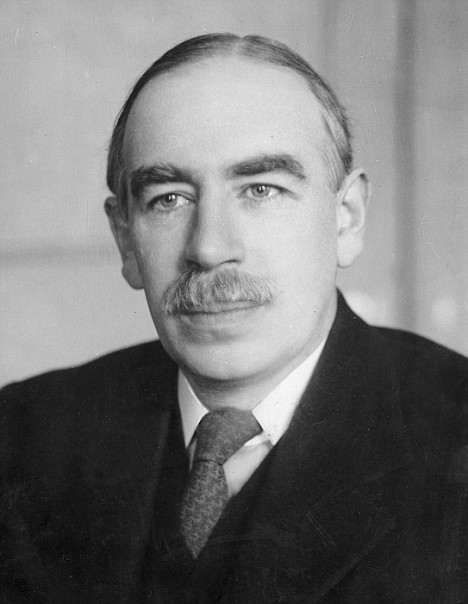
The BBC has just finished a mini-series about the “Masters of Money”. It was in three parts and covered the theories of Keynes, Hayek and Marx. The facial hair alone tells you they’re interesting:

John Maynard Keynes:
Friedrich Hayek:
Karl Marx:
The point of the programme seemed to be that the problems with the economy are more complicated than just stimulus v. austerity. Apparently both have advantages and disadvantages. Whoddathunk. It also followed the current political agenda whereby the issues that no-one wants to discuss are ignored and we just argue about whether history tells us to spend or save in times of economic strife. The main subject of this debate, the Wall Street crash, followed years of hardship, not the most prosperous time in human history. It’s arguably not all that relevant and by focussing on it we ignore other issues where debate might be useful.
One area where there is no debate is the seemingly unchallenged view that benefits for those who can’t be bothered working should be cut. “One Nation”/”The Big Society” apparently means a choice between working for crap money or being left to fend for yourself. It’s maybe an attractive idea to cut benefits altogether but, if you look back in time, we’ve been there and done that – it doesn’t work. 
Back in the 19th century, politicians weren’t as media-savy and they said exactly what they were doing. Just like today, they tried to split the poor (those on benefits today) into the deserving and undeserving. The deserving got help from their local parishes (local authorities today) while the undeserving were sent to the poor house (prison today). Things only changed when Rowantree and the other enlightened men of the time took matters into their own hands and provided jobs in newly invented factories.  There followed an industrial revolution and Britain’s economy led the world.
Another example where the UK is possibly blinkered is the EU. You can expect to be laughed at if you even mutter the word “federalism”. Again, if you look at the 19th and 20th centuries, history tells us that we are infinitely better off together than apart. I seem to recall a similar scepticism across the Pond but, if you forget the Civil War, that worked out pretty well. 
There are other examples of us ignoring history but you get the picture. What we do next is a tough decision, but we do ourselves no favours by allowing the debate to boil down to spend v. save. We’ve been dragged into circular arguments about narrow issues when we should be thinking on a macro scale – like Marx – and actually having a useful debate. Over to you to work out what you think.
Have a great weekend folks,
Cheers