BANG ON!

Good morning Tash Appreciators,

Just a short one this week, which is ironic as it’s something this week’s Tash would never say.

There are various types of towering totems of Tash toting terrificness. Some men wear a Tash because it is fashionable; others for charity. Some even wear a Tash just to irritate their significant others. However, there are a few men, a very few, who wear a Tash simply because their personalities require it and they would look ridiculous if they wore anything else.

Two of my most favourite Tashes were worn by such a man: Rik Mayall. As I’m sure most of you know, he passed away this week.

I’m not going to pretend that I know much about Mayall’s background or what he was like in “real life”. I read a quote which suggested that’s just how he liked it. What I do know is that he created two characters for whom a Tash was absolutely necessary.

The first is Bombardier Bedford, from the Bombardier Real Ale advert:

Tash Friday 13:6:14

The other is Lord Flashheart from Blackadder:
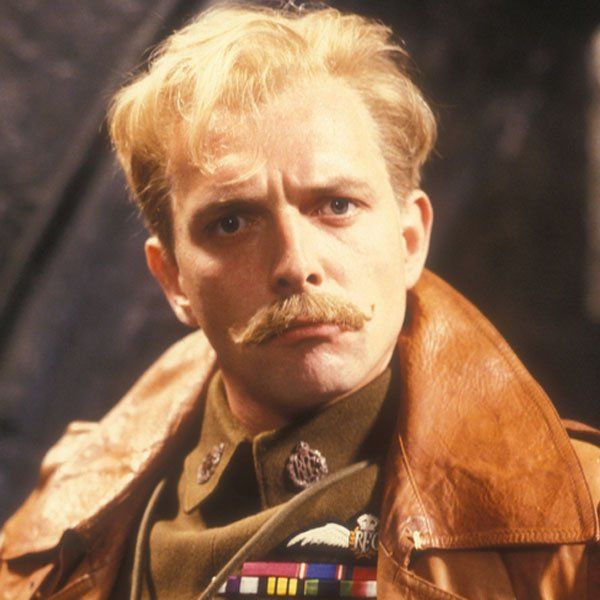
Tash Friday 13:6:14 3

If you have a spare three minutes, this clip is well worth a watch:

The eccentricity and self-confidence of these characters renders it impossible for them to be imagined without their respective Tashes. Whether it’s head-butting and swatting cannon balls out of mid-air while defeating old “Boney” on the field of battle; or admiring a bridesmaid’s beard and saying “WOOF!” in the most provocative fashion imaginable, Mayall’s characters are two of the most amusing I’ve ever come across. The fact that they both sport superlative facial hair only serves to reinforce their excellence.

It’s a shame that Mayall has gone but hopefully, wherever he is, he’s still climbing through his latest conquest’s window – to leave a box of chocolates next to her bed – before machine gunning his phone number into the wall and disappearing into the night to meet her sister.

With that, I shall bid you farewell this week.

Have a great weekend folks!

What’s next?

Closer To The Edge

Good morning Tash Appreciators!

I’ve been enjoying two-wheeled racing of a faster kind than usual this week after being captivated by the Isle of Man TT.

For the uninitiated, the TT is a week-long series of races on different classes of motorbikes. The main course – the Mountain Course – is around 37 miles long and involves riders screaming along normal roads, inches from curbs, lamp posts, garden walls etc, at speeds approaching 200 miles an hour. The fastest riders get round one lap at an average speed of over 130mph. To understand just how fast these riders go, you really have to see them:

The other night, I watch a documentary about the TT called “Closer To The Edge”. The film followed Guy Martin (some of you may have seen him in various programmes over the last few years) and his quest to win a TT.

Martin is entirely focused on racing. He’s very exact in how his bike is set up – which is understandable when there’s so much riding on it – and he distances himself from any kind of commitment in order to ensure that as few people as possible will be affected in the event that he is involved in an accident.

The reason that Martin takes such drastic action to avoid commitment is because of the other side of the TT – death. Almost every year, someone is killed while racing. According to Wikipedia, 242 competitors have been killed since 1911. In Closer To The Edge, Martin narrowly avoids serious injury when he crashes at 170mph and his bike explodes. In the same race, one of the other competitors clips a curb while going flat-out and is thrown about a hundred meters from the road, via a stone wall. His list of injuries seems to include every bone in his body but he somehow survived. As I was doing a bit of research about the TT, I read that someone died in today’s main race.

Every single rider I’ve seen being interviewed says that they know the risks and that it doesn’t put them off. That’s despite many of them having families. When speaking about a competitor who has died, almost all of them say: “he died doing the thing he loved.”

My question – and I don’t know the answer to it – is whether it is ever folly to do something you love? Is it possible to dare too greatly?

Most weeks, TF talks about living to the full and taking a few risks. Is that naive though? How many of us would roll the dice on our lives or livelihoods or happiness in order to chase a dream? If we would, how do we decide when the dream is worth chasing and when we’re better off accepting that some dreams don’t come true? What if the dream isn’t fully formed in your head but you know that you need to do something differently? These are questions which bother me incessantly these days.

As I say, I don’t know what the answers to these questions are. I’d be interested to know what you all think.

As one might expect of a section of the population who live life to the absolute limit, Tashes are commonplace among the motorcycling fraternity. It’s been a tough choice, but here are this week’s Tashes:

Glenn – the Biker – from the Village People:

Glenn Hughes of the Village People

And Paul “Senior” Tuetal, of Orange County Choppers and the Discovery Channel’s “American Chopper”:

Tash Friday 6:6:14

Have a great weekend folks. If you’re interested, the Senior TT (the main race of the week) is being shown on ITV2 at 9pm tonight.

What’s next?

Good Samaritans

Good morning Tash Appreciators!

I was out on my bike last weekend (fear not, this is not a cycling related TF) when I fell foul of some glass on the road and punctured a tyre. The scene at the side of the road was not pleasant:

tashfriday30514

While I stood trying to look like I knew what I was doing, several other cyclists offered their assistance. Naturally – being a bloke – I assured them that I had the situation under control and bade them on their way. Some of these good Samaritans, however, saw through the facade and made meaningful attempts to assist me. As it happened, even with able assistance, my ineptitude shone through and I had to call for a lift. Incredibly, two people offered to pick me up and I was soon safe at home, hell-bent on becoming an expert in changing a tyre.

As it turned out, the good Samaritans were not just on the road up to Whitelees last weekend.

In the centre of Glasgow, as the iconic Glasgow School of Art seemed to be entirely lost to fire, members of the Scottish Fire and Rescue Service worked tirelessly to save what they could.

I’m sure they did so at some risk to their own safety and you might think that, as soon as the risk to people had been reduced, the fire fighters would prefer to avoid any risk to themselves. Apparently that wasn’t the case. Even though the fire spread through the building from top to bottom, 90% of the building was saved; as was 70% of its contents.

You have to ask why these fire fighters would work so hard to save inanimate objects (however culturally important) when doing so might put their own safety at risk. The Assistant Chief Officer on the scene answered that question when he said:

“We are of course very conscious the Mackintosh is a world-renowned building that is a key feature of this great city, and that the artworks it stores are not only valuable but also cherished… We are acutely aware this period is the culmination of years of endeavour for students and that their irreplaceable work is inside the Mackintosh.”

I thought it was interesting – in a week when a substantial proportion of the population voted for the latently racist and patently hateful UKIP – that I saw two examples of people go out of their way to help people they didn’t know.

What prompted the help in these cases was solidarity among folk who have common interests in a particular sport and a particular city. More than that, the fire fighters also went above and beyond what could reasonably be expected of them just because they knew that the students had put a lot of effort into their work.

Leaving aside the policies of UKIP, an issue which bothers me persistently is the attitude or feeling which UKIP creates. All of UKIP’s policies seem to be premised on the supposedly shocking state of British Society – “Broken Britain”, as the Daily Mail likes to put it.

Sure, there are aspects of society which are objectionable, but when I see folk helping out others just because they think it’s the right thing to do, I am reminded that people are generally well-intentioned, pleasant and just like “us”. I reckon you’d have difficulty in finding a UKIP supporter with anything close to a positive attitude about society as a whole; they’d rather predict doom and poverty.

I’ll end this week’s TF with two photos. The first is of a “thank you” which was left for the fire fighters outside Glasgow’s Central Station:

Tash Friday 30:5:14

And the second is this week’s Tash – Charles Rennie Mackintosh – designer of the Glasgow School of Art.

Tash Friday 30:5:14 2

Have a great weekend folks!

What’s next?

Helplessness Blues

Good morning Tash Appreciators,

This week, I watched the last episode of The West Wing for the umpteenth time.

There were a few TF related points to take from the last 5-10 minutes before the curtain fell on President Bartlet’s regime:

  1. As he stands in the West Wing for the last time, President Bartlet looks out the window onto the White House lawn. It’s clearly hitting him that his time in power is coming to an end and he’s thinking whether he could have done more. His wife reassures him that he “did a lot of good” but he’s clearly not convinced.
  1. Later, at the end of his first staff meeting in the Oval Office, the new president (I won’t tell you his name just in case any of you want to watch it in the future) asks “what’s next?” and smiles. He’s full of ambition and determination to achieve all of the things that Bartlet didn’t.
  1. Finally, in the last scene of the series, President Bartlet is flying on Air Force One to his family home. The new president has been sworn in and Bartlet’s job is at an end. Again, he’s staring pensively out the window as the sun sets in the distance. This time, when his wife asks him what he’s thinking, he simply smiles and says:

Tomorrow.

I suspect that from time to time we’ve all experienced those emotions. We’ve all been full of enthusiasm at the beginning of a great undertaking and, by the time we reach the end, we have all found ourselves wondering whether there’s more we could have done.

That’s where perspective comes in. Once we realise, as President Bartlet did when he looked out of the window of Air Force One, that we are but functioning cogs in this great machinery we call humanity, we understand that it’s an achievement to have made even a small positive change to the world around us.

Peppered through this week’s TF are references to a song called “Helplessness Blues” by Fleet Foxes. The song starts by describing someone suffering from the helplessness blues but in a line that marks a change of pace and message Robin Pecknold sings:

What good is it to sing helplessness blues?

Why should I wait for anyone else? 

As much as we all sometimes feel helpless, or that we could have done more, a bit of perspective should change that. The only way to deal with that feeling is to remember that our  feelings of helplessness will continue only for as long as we choose not to take control; that we cannot wait for someone to tell us what to do; that we must think of tomorrow rather than yesterday; and that we must ask “what’s next!?”

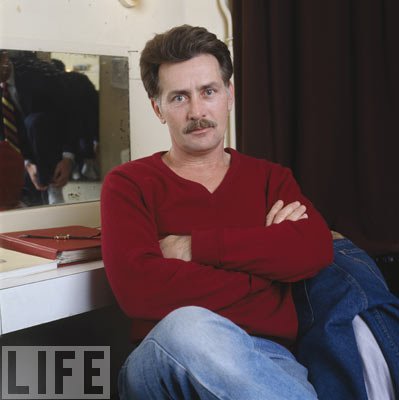
Although President Bartlet doesn’t rock a Tash, it turns out that the actor who plays him did. Martin Sheen, take a bow, this is a smashing effort:

Tash Friday 23:5:14

Have a great weekend folks!

What’s next?

Tick Tock

Good morning Tash Appreciators,

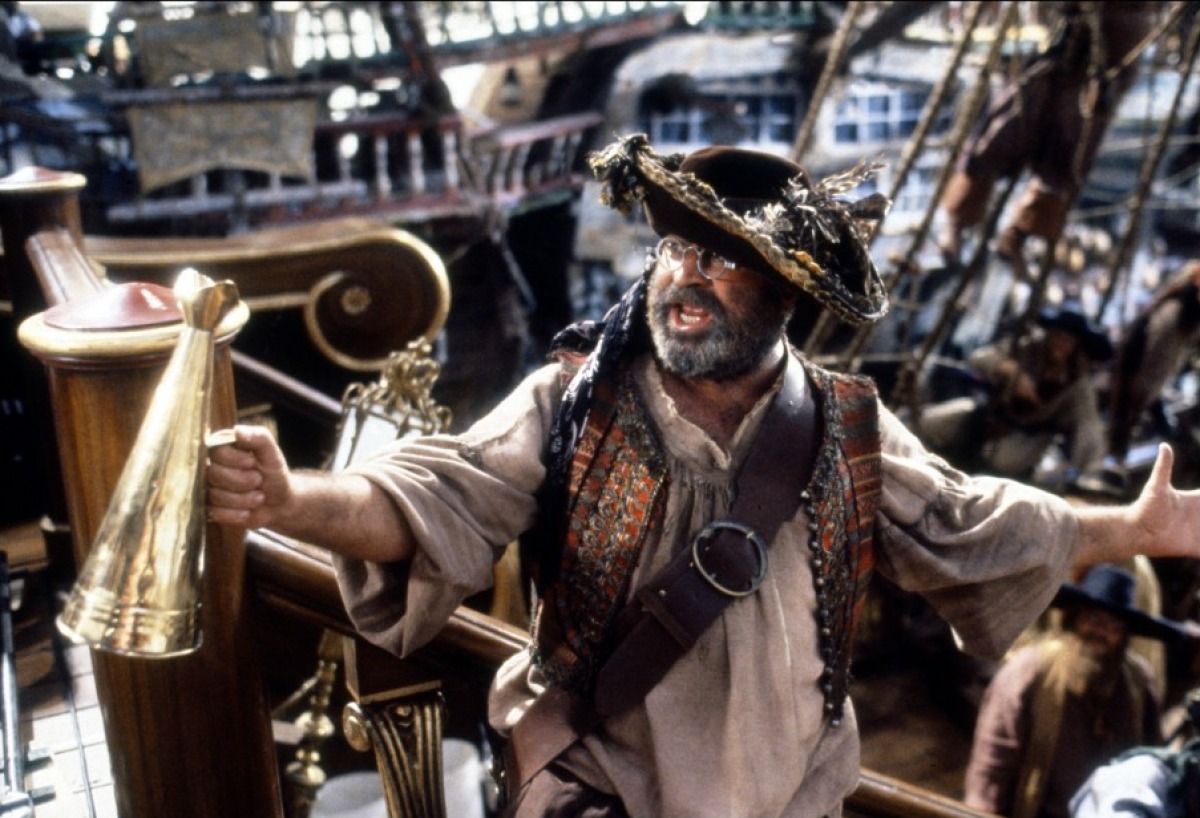
I was struck this week by the reaction of many people to the death of Bob Hoskins. Overwhelmingly, the first reaction of people mentioning the news was to describe his or her memories of one of his roles. That’s true for me as I immediately thought of his portrayal of Smee in Hook – a film that many of us remember fondly:

Tash Friday 2:5:14 4

Remembering Hook started me thinking about Peter Pan and J. M. Barrie’s story more generally. I have to say, I didn’t think too much about the plot when I was younger. My understanding was essentially: boy v. Pirate = good fun. It strikes me now that maybe I should take a closer look.

Captain Hook (his first name was James, you know) was a swashbuckling and cruel pirate. He plotted and schemed against someone who was a good 40 years younger than him. However, he was terrified by one thing: the tick-tock of a clock in the belly of a crocodile i.e. his doom:

Tash Friday 2:5:14 2

Before he died, Bob Hoskins gave his daughter 11 tips to follow in life, which she then listed on her website. These tips were: laugh; be yourself; be flamboyant; don’t worry about other people’s opinions; get angry; whatever you do, always give it a good go; be generous and kind because you can’t take it with you; appreciate beauty, take pictures and make memories; don’t take yourself too seriously; never, ever, ever, ever give up; and love with all your heart.

I think James Hook could have used those tips. Rather than using the tick-tock of the crocodile as a reminder that life is sometimes short and that he should get on with making the best of it, Hook became resentful and hostile.

As for us, regardless of whether we hear it or not, time is always ticking away. It may not be a crocodile that gets us but none of us will be here forever. I guess the dream we should all have is to move onto our last great adventure in the way which Bob Hoskins seems to have done. To do that, we should maybe remember something which J.M Barrie says in the book:

“Perhaps we could all fly if we were as dead-confident-sure of our capacity to do it as was bold Peter Pan that evening.”

I am aware that several Appreciators are having problems with confidence these days. They are wondering whether they should take the path which they know will lead somewhere safe (albeit somewhere where the may not necessarily want to go) or the path which turns away into the unknown. I would recommend taking a bit of both Peter Pan’s and James Hook’s attitudes into account when making that decision: hear the clock ticking; be conscious of the fact that we all grow up/old; but have the confidence in yourself to fly.

I think it’s time for the Tashes. The obvious example is Dustin Hoffman, in Hook:

Tash Friday 2:5:14 3

Usually, such an excellent example would suffice for one week. However, I was surprised to discover that J.M. Barrie rocked an absolutely superlative Tash, so this week is a double-helping of Tash-based goodness:

Tash Friday 2:5:14

Have a cracking weekend folks!

What’s next?

If at first you don’t succeed

Good morning Tash Appreciators,

I had not intended to follow up on last week’s TF straight away but I had also not expected the reaction that I received. The people spoke and their answer was:

Tash Friday 11:4:14 3

Here are a few examples of the responses (I have paraphrased in places to take out some of the stronger language):

“Re TF, what you are doing is laudable but nationalism is not something that can be argued dispassionately. It’s a matter of faith. Your average nationalist cannot be shaken from the belief that he is right (he loses his ability to reason when he cedes his individualism to the “nation”). Folk lamenting the lack of debate are missing the point: nationalists cannot debate. They look for arguments supporting their prejudices (same as folk who deny global warming).”

“It’s a disingenuous debate and I’m saddened by your willingness to try to take the politics out of an inherently political debate. There is no independence on offer, stop pretending that there is.”

“I know you are trying to broaden it out but the issue of the day is whether we have an Independent Scotland or not. I don’t think your thing is impartial because it implicitly accepts the premise of Nationalism. You’ve been beaten in the dressing room.”

“This weeks TF is a real self indulgent effort…”

There were other comments too and I’m grateful to everyone who responded.

The point about faith is particularly interesting. In a world that is only able to operate thanks to logarithms and science, faith can be seen as a synonym for irrationality and as something that is unhelpful when it comes to decision-making.

I can see the merits in that point of view, but if our lives were ruled by logic, would it not be a terribly lonely and uneventful place? Would we risk heartbreak by entering into relationships with people who, at least at first, are strangers? Would we have children? Also, to what extent do we base our “logic” on notions that we don’t fully understand? For example, how many of us use modes of transport that rely on the internal combustion engine or aerodynamics without really knowing how or why they work? How many of us understand how and why modern medicine operates? These are all things I don’t understand but in which, I suppose, I have faith.

It’s also not accurate to say that only a “yes” vote is based on faith. A “no” vote will also involve faith; just a different kind. I also don’t accept that we can’t have a conversation which involves faith. I think that we need to tailor the way we talk to each other in order to take into account where folk are coming from.

To conclude, I don’t think that we should go into the voting booths on 18 September and make a decision based on faith alone. After all, we wouldn’t get on a plane if it’s wings looked a bit rickety and we wouldn’t take medical advice from a doctor who was drunk. The point I’m trying to make is that faith does have a part to play in the independence discussion.

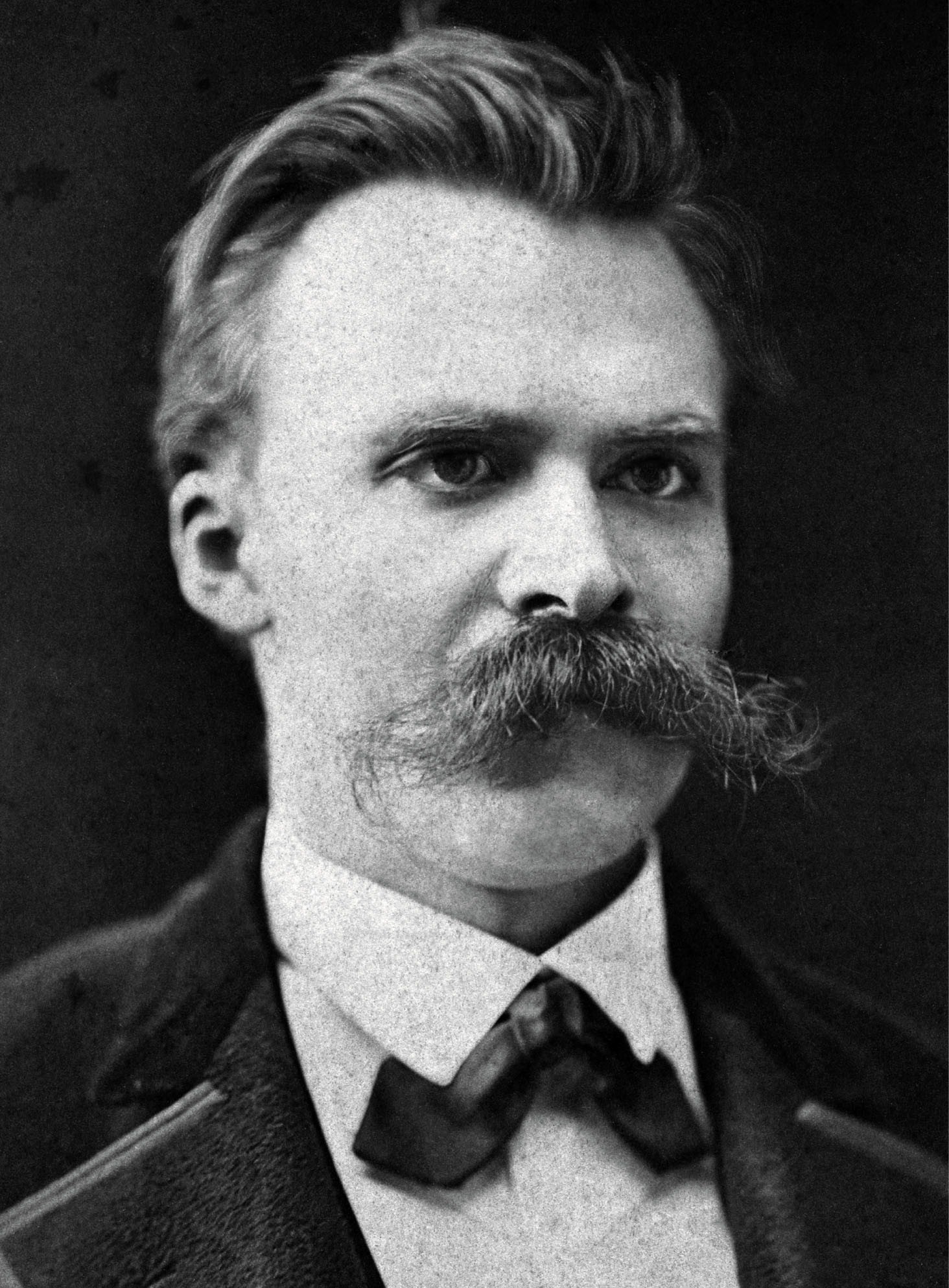
For the sake of offering all points of view (and to preempt this being thrown in my face), I’ll leave you with a contrary view from this week’s Tash: Friedrich Nietzsche

“Faith: not wanting to know what is true.”

Tash Friday 11:4:14 4

Have a great weekend folks!

What’s next?

People of Scotland, lend each other your ears

Good morning Tash Appreciators,

For once, the subject of this week’s TF is not a Tash-toting festival of humanity (although, of course, such a person will be included) but is a topic that will impact many of us and generations of Scots to come. This week, I’m talking about the referendum which will ask whether Scotland should be an independent country

I must say from the outset that I will not be offering my view in relation to the referendum. My aim this morning is to offer a way for us to have civil and constructive conversations about our hopes and fears for Scotland in the future. It’s important that we have these discussions now because the way in which we talk about the referendum will shape how we talk about Scotland from 19 September onwards.

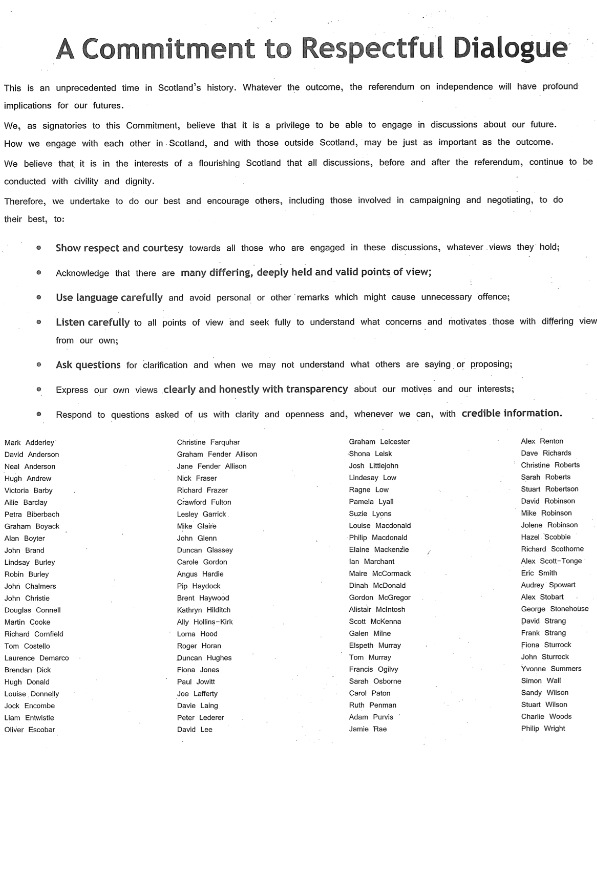
To start that process, I invite you to consider this Commitment to Respectful Dialogue.  Some of you may have seen this in The Herald and The Scotsman a couple of weeks ago, and many of you will recognise a few names amongst the signatories:

Tash Friday 4:4:14

A group called Collaborative Scotland presented the Commitment following a series of meetings which took place over the last 6 months or so. The meetings, which were chaired by John Sturrock QC (an internationally recognised facilitator of constructive discussions and negotiations), gave those who attended the chance to test the theory behind the Commitment. The meetings were specifically not an opportunity to debate the referendum but were an opportunity to talk about how we have conversations about the future.

The magic of the process was that when the 50 of us sat down in groups to talk about our aspirations for Scotland, we discovered that the hopes and fears that we have in common are far more numerous than those that divide us. During our conversations, it was generally impossible to tell which way others would vote and, tellingly, that didn’t seem to matter.

So what does this have to do with you? Well, I know how many of you read TF every week and I suspect that many of you would find the conversations which I observed informative and inspiring. I also know that many of you are influential within your work/social circles and it strikes me that, together, we could spread the Commitment to a wider audience.

After all, on 18 September, we will be given the opportunity to shape Scotland’s path for centuries to come. We should take that opportunity to act as positively and constructively as we can. For my part, I’m planning to help host a conversation in Glasgow, and if there’s an appetite for it, I will invite all of you to come along.

I’ll therefore leave you with a link to the Collaboration Scotland website, where you can sign up to receive further information and offer your support to the Protocol; a request that anyone who might be interested in coming along for an evening of conversation in Glasgow sends me an email; and a quote from this week’s Tash, Mahatma Ghandi:

“We may have our private opinions but why should they be a bar to the meeting of hearts?” 

Tash Friday 4:4:14 2

It seems that every week that passes, this question becomes more important: what’s next?

Have a great weekend folks!

For the makers, the doers and the savers.

Good morning Tash Appreciators,

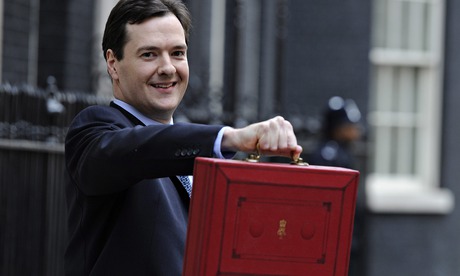
This week saw the UK’s Chancellor, George Osborne, deliver his budget for the coming year. In the main, the headlines in response to his speech were taken up by better-than-predicted economic growth; an increase in the amount of money that an individual can earn tax-free; and an increase – to £15,000 – of the amount an individual can put into an ISA (a savings account) tax free each year.

Chancellor of the Exchequer George Osborne

Mr Osborne said:

“We’re building a resilient economy. This is a Budget for the makers, the doers, and the savers.”

Before I throw my thruppence (soon to be known as the pound coin) into this conversation, I should be clear that I have a leaning towards egalitarianism and am therefore biased in this debate. That being said, I question whether this really is a budget for the makers, the doers and the savers.

In the UK, around 1.4 million people are employed in jobs that pay the minimum wage. If you’re over 21, the minimum wage means that you will earn at least £6.31 per hour, or a little over £11,000 (net of tax) per year.

That may sound acceptable but numerous employers disagree. They pay their staff a Living Wage, which is £7.45 per hour generally and £8.80 in London. The Living Wage is calculated by considering what a person must earn to have a minimum acceptable standard of living. On that basis, Mr Osborne is allowing 1.4 million people to be paid a wage which doesn’t even provide the most basic standard of living.

So why is this the case? Well, one answer to that question is that increasing the minimum wage by 39% in London and 18% everywhere else (i.e. to the level of the Living Wage) would be difficult for businesses to support. That’s all well and good, but I wonder whether, after a disastrous few years for our economy, our focus should be on things other than the concerns of businesses.

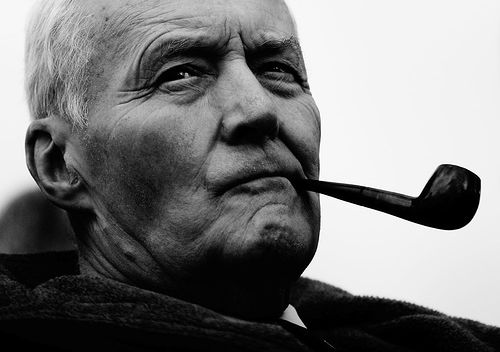
Last Friday, former Labour MP (he was an MP for 47 years), Tony Benn, died. Some will not have agreed with his politics but something he said has been on my mind this week:

“We are not just here to manage capitalism but to change society and to define its finer values.”

Tash Friday 21:3:14

I don’t have an issue with Osborne crafting a budget to support the makers, the doers and the savers, my issue is that he simply isn’t prepared to do it. He qualifies all his efforts by first testing them against their effect on business. If he really wanted to change society and help those who  make, work and save, he’d pay them a wage which would give them a minimum acceptable standard of living, and then some.

In the end, this all comes down to justice, and whether the notion of justice is a pipe-dream that can ever come true. I say  that it can, if we want it to.

This week’s Tash believed in justice, even when it was difficult and involved sacrifice and compromise. He may be a fictional character, but I still rate him higher than many of our real politicians. I give you Commissioner Gordon, of Gotham City and the Batman trilogy.

Tash Friday 21:3:14 3

Have a great weekend folks!

What’s next?

How much?

Good morning Tash Appreciators,

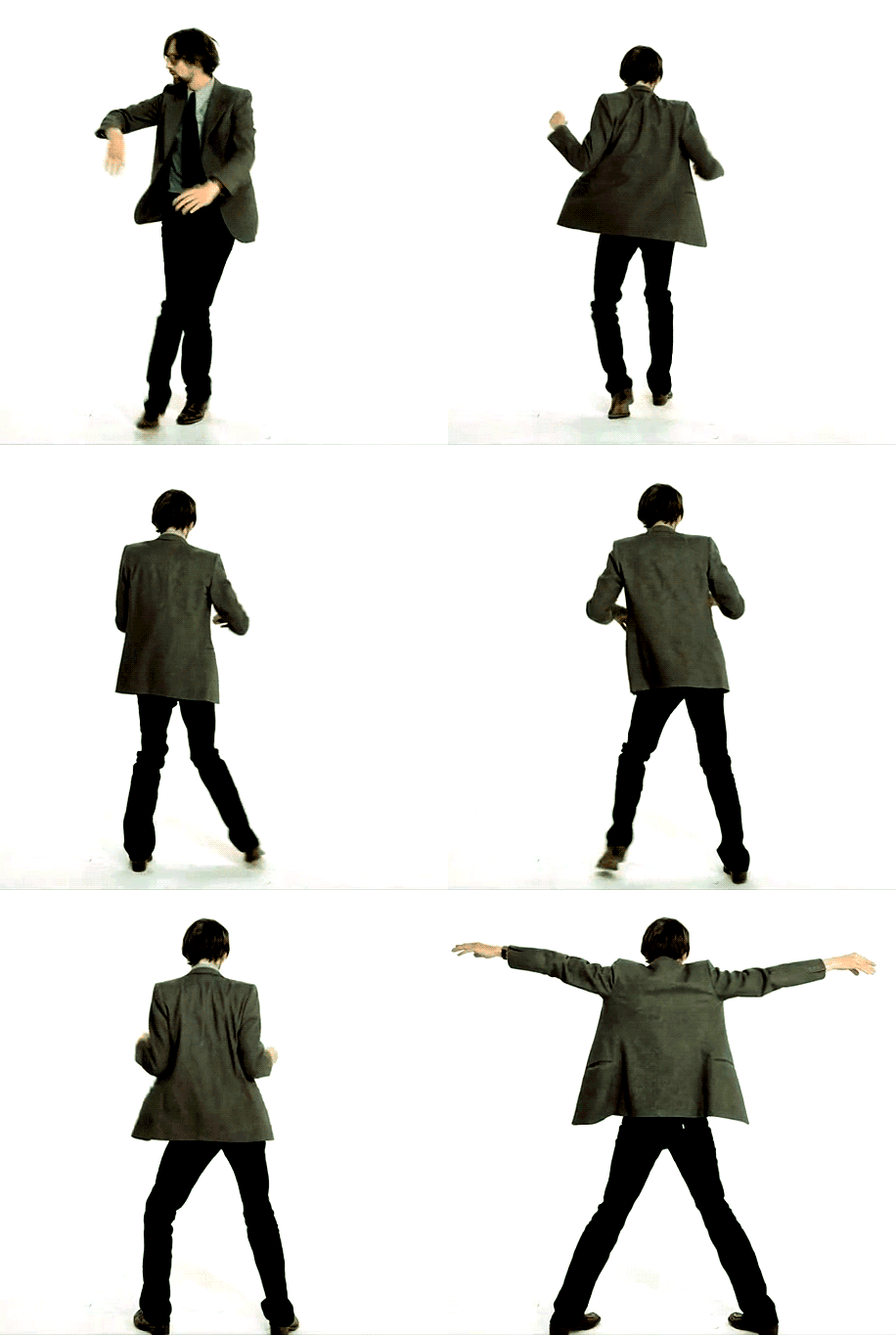
It appears that Spring is finally here! I was walking to work one morning this week and Pulp’s Sunrise started to play on my generic mp3 device. Although I didn’t do it outwardly, my insides were dancing much like Jarvis Cocker during his performances of this song:

For those not able to watch videos on YouTube, it goes a bit like this:

Tash Friday 14:3:14 4

I was out with a couple of pals this week and we got to talking about whether, given the right amount of money, we would do any job. I have to admit, my attitude is that unless you’re doing a job about which you are passionate, or which is vocational, then earning the most you can should be your main objective. The contrary argument to that is, of course, that money can’t buy happiness and there are more important things in life than the cash in your pocket.

After strong arguments on both sides, I am just about ready to admit that my attitude was/is wrong. However, it took watching a TV programme and seeing a desperate man with a moustache to finally persuade me.

If I was to take my argument to it’s logical conclusion (and we all know that logic is the correct way to make an argument…), then I would do pretty much anything if the price was right. That begs the question, what would I be prepared to do for a pile of money like this:

Tash Friday 14:3:14 5

Would I be prepared to work 7-days a week? Would I be prepared to sell drugs? Would I be prepared to kill my competitors? The answer to all of these questions is “no”. So where do I draw the line? That’s something I’ll have to work out.

I realised the error of my ways after sitting down to watch another episode of Breaking Bad. Fear not, I shall not spoil the plot, I merely point out that if I was purely motivated by cash, then I could end up behaving like one or more of the characters in that programme. I don’t want that, so one way or another, I’ll need to work out what my real motivations in life are. After all, I want to be able to look in the mirror and not see this man (however excellent his Tash may be) looking back at me – I don’t think he’s capable of dancing like Jarvis Cocker.

Tash Friday 14:3:14 3

Have a great weekend folks!

As ever, the question on my mind is: what’s next?

Qubits and quiet moments

Good morning Tash Appreciators,

I read two articles this week that blew my mind: one was about quantum computing and the other was about mindfulness.

The quantum computing article described a company called D-Wave that has produced a computer (known as the D-Wave 2) costing $10,000,000. The temperature of interstellar space is 80 times warmer than the temperature at which the D-Wave 2 operates and it looks like this:

Tash Friday 21:2:14 2

The article describes how it works in detail but here’s the key part:

Regular computers work with information in bits. Each bit can either be at 1 or 0 at any one time… Now imagine a computer that operates under quantum rules… Its bits could be 1, or 0, or 1 or 0 at the same time.

This means that a computer using quantum bits can do far more calculations than one using regular bits. To be exact, the D-Wave 2, which has 512 quantum bits, could perform 2 to the power of 512 operations simultaneously. That’s more operations than there are atoms in the universe, by many orders of magnitude.

We’ve all seen how pervasive technology and computing have become in our lives. Many of us will have access to work emails at all times and it can sometimes feel like there is just too much information to process.

That’s where mindfulness comes in. It’s difficult to describe mindfulness but imagine training and developing your mind in the same way you train to develop your other muscles. Practicing mindfulness helps you to be “present” in a given moment and manage your thoughts.

To show how most of us struggle with that simple sounding task, take 20 seconds and try to clear your mind of all thoughts.

Didn’t work, did it? Thoughts about work or things you need to do will no doubt have popped into your head. You’ll also probably have found that the more you tried to clear your mind, the more those thoughts appeared. Mindfulness is aimed at helping you train your mind to acknowledge thoughts – but not dwell on them – and to allow you to focus on the task in hand.

My point this week is that many of us often feel like there are more operations going on in our head than there are atoms in the universe. That’s the price we pay for living in a connected society. All that being said, I’m comforted by the fact that, while some folk are striving to make technological advancements, others are striving to find methods which might help in alleviating the pressures on our minds.

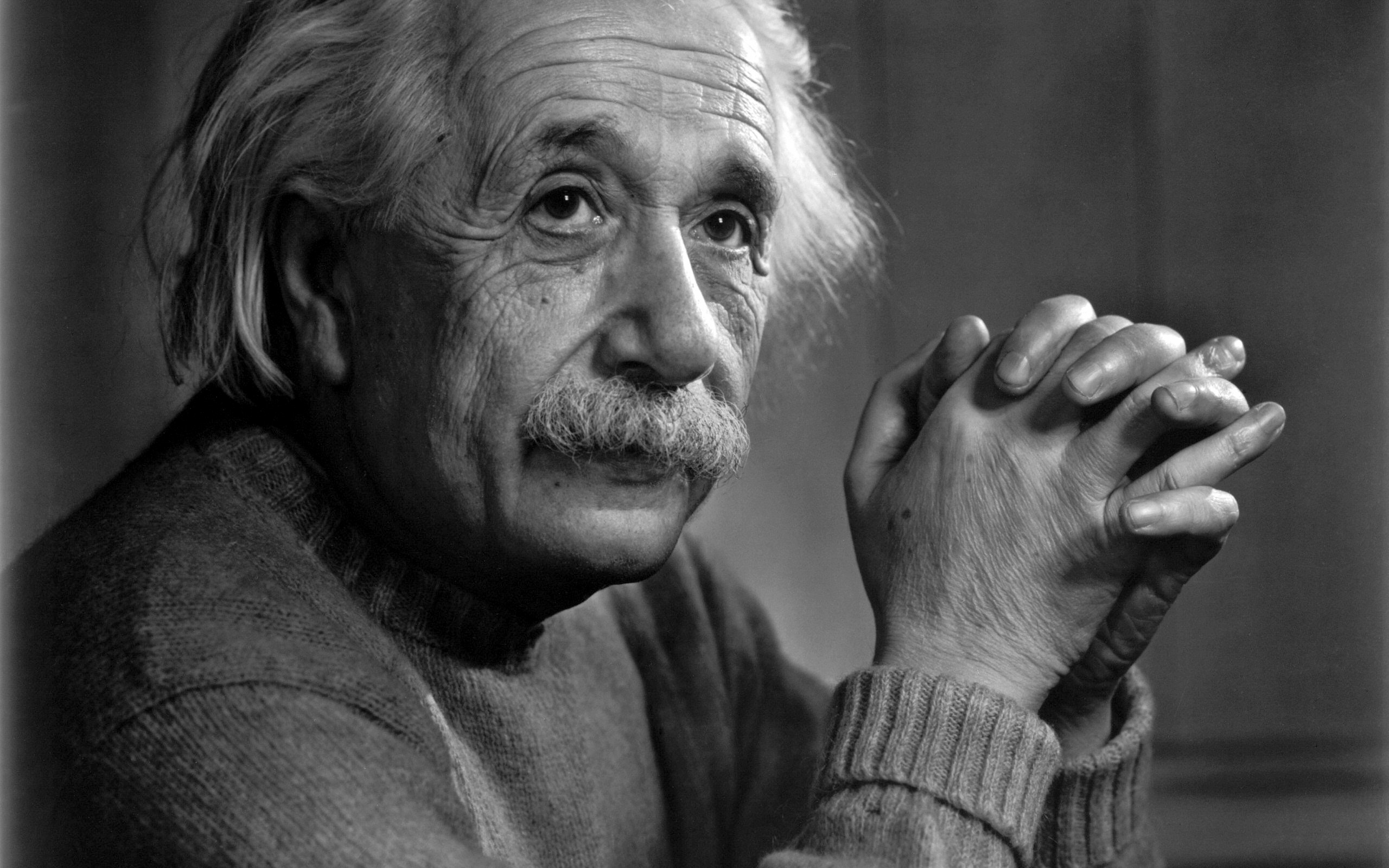
This week’s Tash apparently – according to those in the know (i.e. not me!) – found quantum mechanics so counterintuitive that he thought the theories relating to it must either be wrong or incomplete. He also said this:

The eternal mystery of the world is its comprehensibility.

After trying to wrap my head around qubits and how to best find a quiet moment, I was glad to discover that even Albert Einstein struggled with comprehending the world around him.

Tash Friday 21:2:14

Have a great weekend folks!

What’s next?
p.s. If you’re interested, there’s a free app called Headspace which is aimed at helping users become more mindful. Part of the app is a ten-day programme called “Take Ten” where users take ten minutes out of their day for ten days in an effort to get a basic understanding of mindfulness. I enjoyed it.